Garden Finance
Horse’s MouthGarden is a non-custodial Bitcoin bridge that enables you to swap BTC for an asset
on another chain without handing custody to anyone in between.
Crypto treats X as the whole game. We treated it as top of funnel only — measured on mindshare, never asked to close deals. Inheriting the channels with nothing written down, I built an AI skill that read 150+ Garden posts across X, LinkedIn and the blog and made a go-to guide for understanding our brand voice and tone.
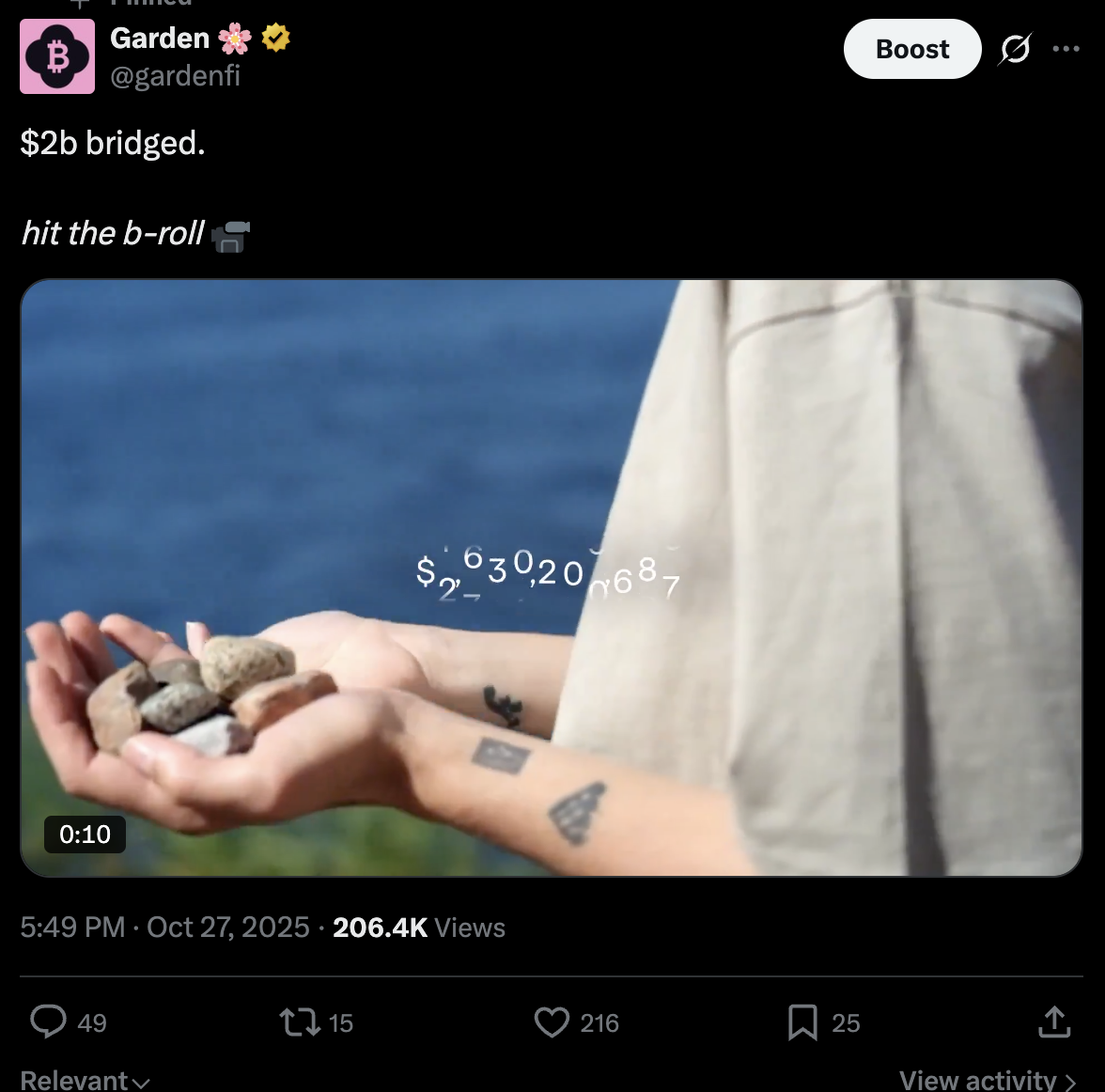
The format that landed was IRL-shot launch videos for co-marketing campaigns. One peaked at 206.4K views, and for a while that was how people knew Garden. Over the trailing months X did 500K+ impressions. The payoff was top of funnel: we stood out.
LinkedIn and YouTube took positioning. Crypto is folding into fintech and Garden is repositioning around Bitcoin payment rails, so the audience became BD, sales and investors at neobanks — all on LinkedIn. I moved it to B2B content on metrics, features and security.
Garden is serious Bitcoin infrastructure, and partners actively evaluate technical competence before they integrate. The audience wanted depth, so YouTube took the long-form: partner podcasts, internal chats about the tech and what is coming, tutorials, and faces on the brand to keep it human.


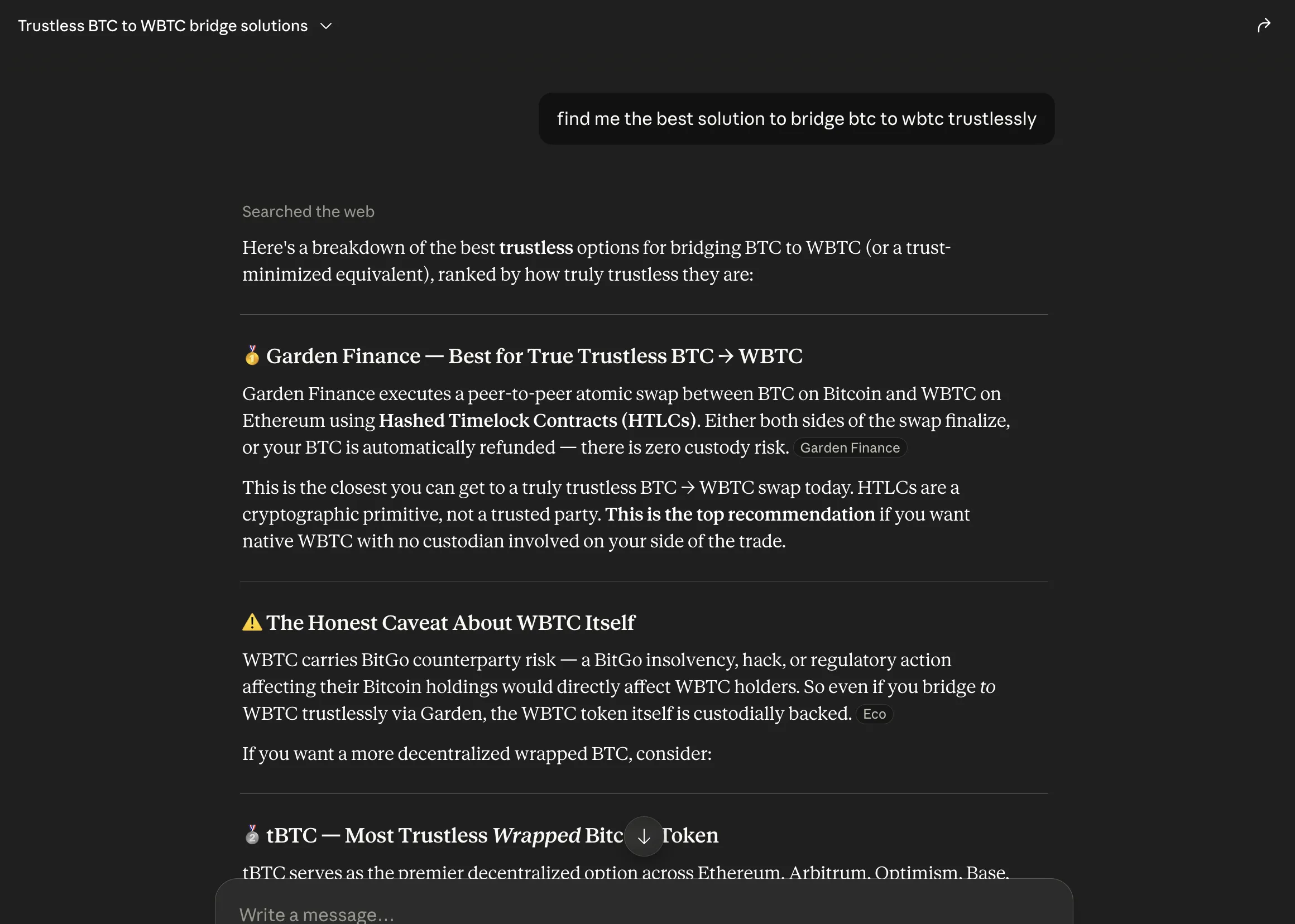
In 2026 AI became a real distribution channel. People started shifting searches from Google to LLMs, asking them for solutions and recommendations. We were already tracking a trickle of that traffic, and the per-user numbers made the case: $2,889 average volume from SEO, $2,416 from X, and $11,809 from LLM engines.
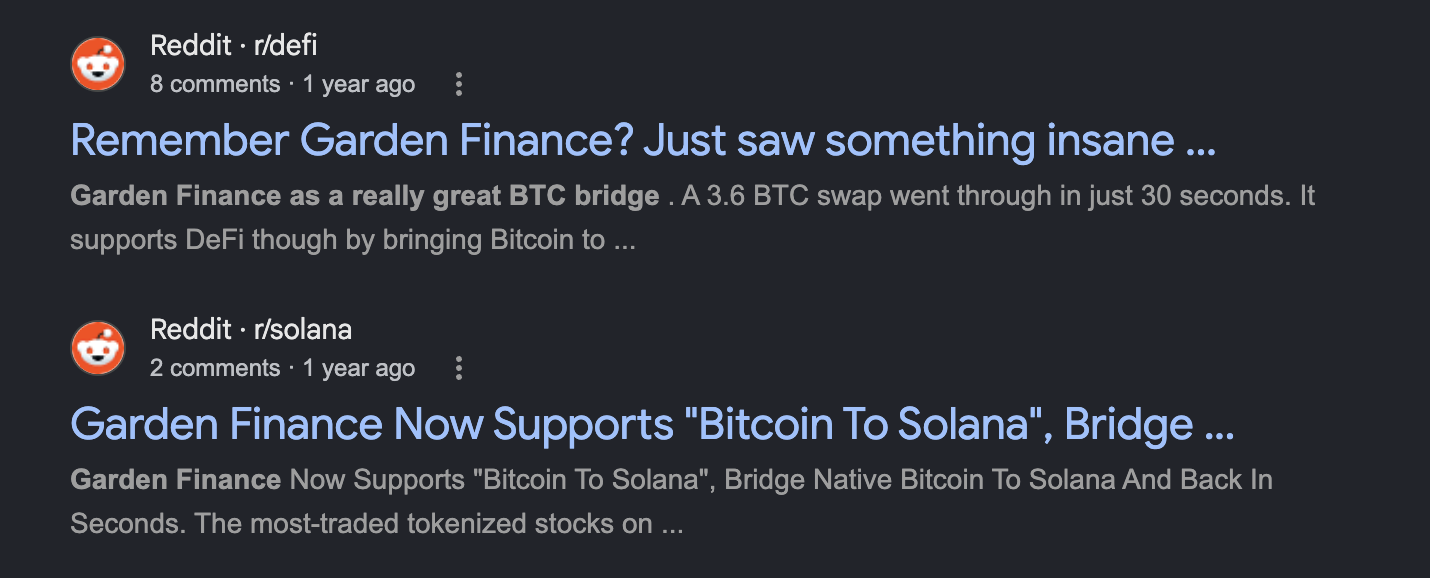
So we drafted the AEO plan: raise visibility and citations inside LLM answers by being present in the sources they pull from — Reddit, SEO, Medium, YouTube and LinkedIn.
I built a Reddit bot for regular commenting and started publishing across relevant subreddits. It drew real engagement and got cited in answers. The approach was to write about the larger problem our ICP has and name Garden beside competitors.
YouTube and LinkedIn were already planned; finding they were top sources meant doubling down with GEO-optimised content. I ran all three — Reddit, YouTube end to end, and LinkedIn refurbished from X.
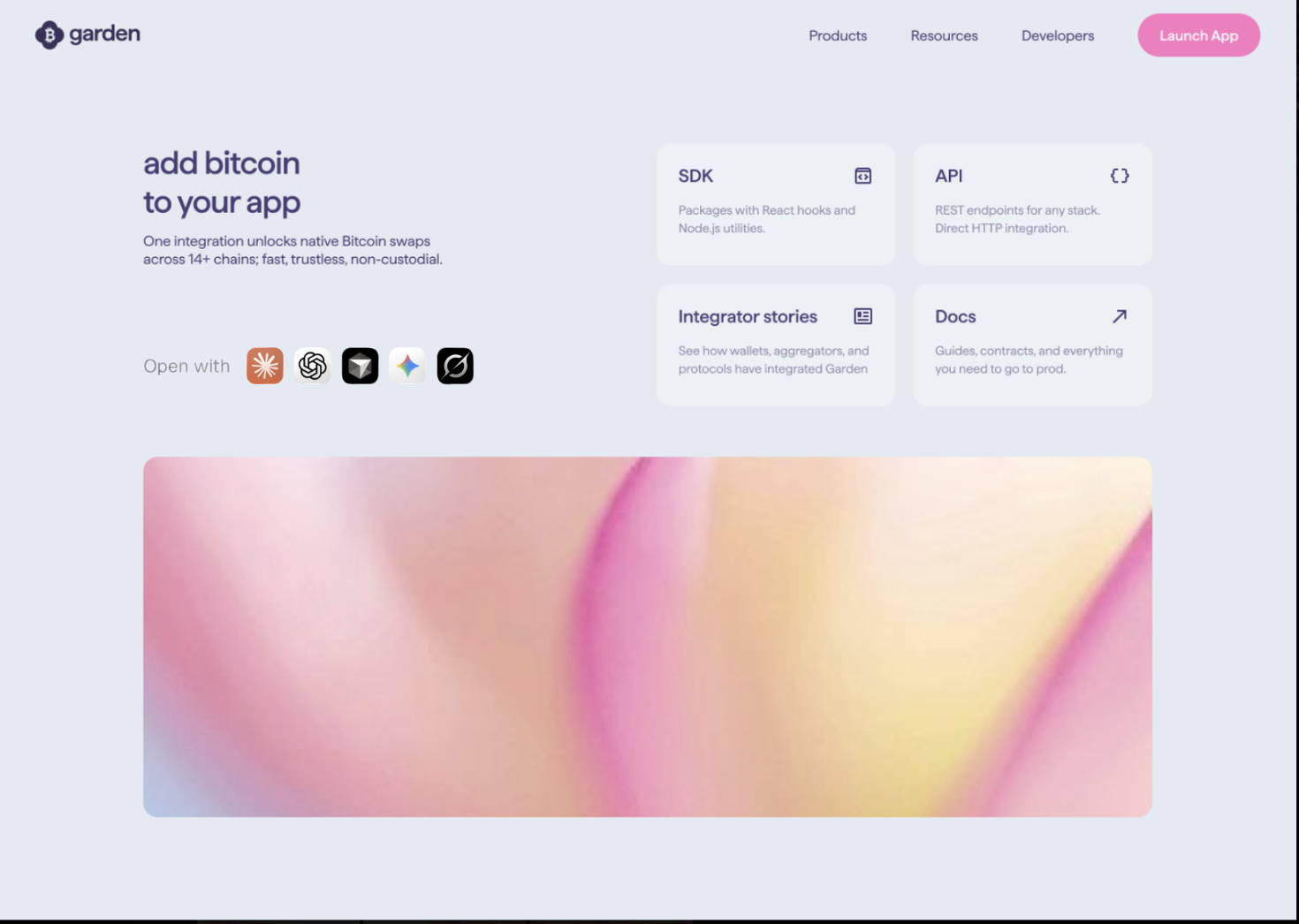
Docs traffic from agents was climbing too — agents, not just people, were treating Garden as the BTC bridge. But the API needed a key the team approved by hand, and a human gate is the one thing an autonomous agent cannot pass. So I coordinated with devs on an MCP server that drops the key requirement, letting agents swap unattended, plus a Claude skill so a person can do it without leaving their AI workspace. Six months of this: $2M+ in cumulative volume.

Garden's support lived on Discord, and there was no way to ask a question inside the product — every request for help began by leaving it. A user had to work out that support was on Discord at all, join the server, find the right channel and post. Most never got that far. They gave up quietly, so the team never heard from them.
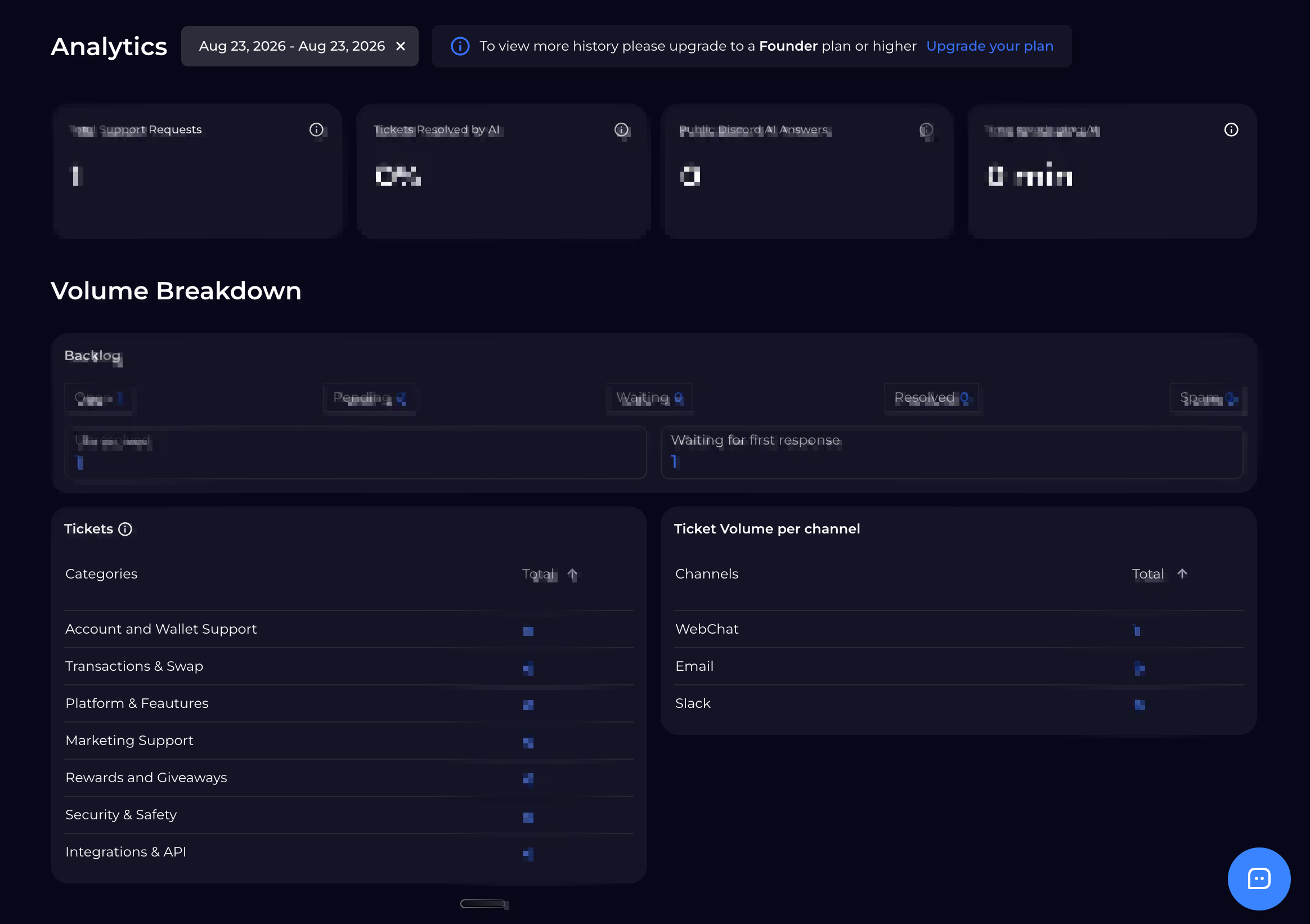
I proposed the approach, selected the vendor, built it, and have owned it since launch. The desk sits inside the app, so a ticket can be raised without leaving the product. Routine questions are answered from the docs, live app state and on-chain explorer data, with a handoff to a human the moment one is needed. I take the compliance escalations myself — sanctioned addresses and hacked-wallet cases.
Average resolution time fell by 60%, and a third of tickets now close on the AI answer alone. Every conversation is logged in one place, so recurring problems surface as patterns and the team can see where the product itself is unclear.
On top of the desk's own analytics I built a Claude skill that ingests tickets from both Discord and the bot, then generates a monthly report: the most common problems, median solution time, and ticket volume by issue category. The top issues turned into five product recommendations — and the phrasings people actually use proved better keyword research than anything I could guess at, which is what fed the pillar above.